
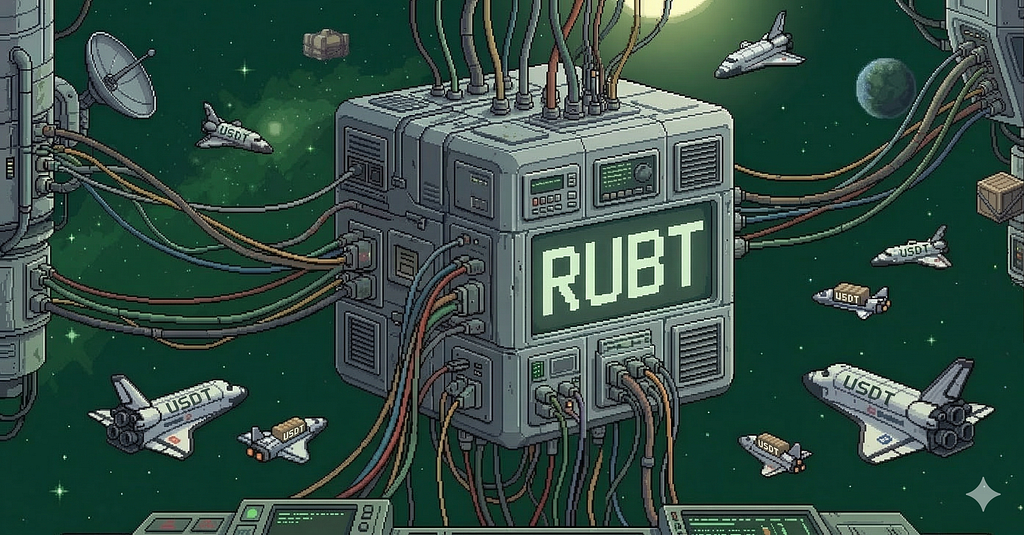
Tetris Money Architecture: RUBT Pricing Mechanisms and Strict Compliance Principles
The cryptocurrency market infrastructure requires transparent solutions for institutional participants. The Tetris Money project offers a protocol for the legal conversion of rubles into USDT stablecoins. The digital asset RUBT is at the core of the system. When analyzing this solution, it is fundamentally important to outline the basic operational principle: the system is designed exclusively for asset exchange. The protocol is not a tool for cross-border transfers, does not provide services for evading restrictions, and operates strictly within the legal framework.
RUBT Pricing Mechanism and Market Arbitrage
The valuation of digital assets is a critical factor for the corporate sector. The RUBT exchange rate is based on a transparent economic model that completely eliminates hidden intermediary markups.
The base value of the token relies on a hard peg. Within the regulated contour, one RUBT token is always backed by one fiat ruble. The issuance (minting) of the digital asset occurs exclusively at the moment real funds are deposited into the bank accounts of licensed agents. The reverse process of burning the token is accompanied by an instant payout of the fiat equivalent.
On the open market of decentralized exchanges (DEX), the conversion cost in the RUBT/USDT pair is determined by the global balance of supply and demand. Liquidity pool algorithms automatically adapt the rate to current global quotes. If the value of USDT against the ruble changes on a macroeconomic level, smart contracts reflect these changes without delay.
System stability is guaranteed by the market arbitrage mechanism. In the event of a short-term drop in the RUBT value on the exchange below the nominal value of one ruble, independent market makers buy the undervalued asset. They then redeem the purchased tokens through the protocol’s B2B contour, receiving a full fiat ruble and securing a risk-free profit. This process creates instant demand, returning the exchange price to parity. Businesses receive an objective market rate with a fixed protocol fee for depositing or withdrawing funds at 0.05%.
Multi-Level Compliance System
Working with tokenized assets requires flawless adherence to regulatory standards. Tetris Money builds a security architecture focused on the requirements of supervisory authorities.
The KYB (Know Your Business) procedure acts as the first stage of protection. The platform fundamentally does not interact with anonymous retail clients in the fiat gateway. Every legal entity undergoes deep verification. This completely blocks the possibility of integrating funds of dubious origin into the system.
The second element of control is on-chain transparency. All RUBT operations are recorded in the public Ethereum blockchain registry. Every transaction leaves an immutable digital footprint. Tax authorities, banks, and financial monitoring services can easily verify the origin of assets and the legality of operations.
The third reliability factor is based on the integration of licensed agents and regular Proof-of-Reserves audits. Fiat backing is stored in segregated accounts. This approach guarantees 100 percent reservation of every token in circulation and eliminates the risk of system insolvency.
Focus on Exchange and Inherent Resilience to External Risks
To understand the Tetris Money legal model, it is necessary to clearly distinguish between the terms asset exchange and money transfer.
The protocol is exclusively a conversion infrastructure. The platform allows for the legal exchange of rubles for USDT stablecoins. The project does not forward money to foreign counterparty accounts, does not pay foreign invoices, and does not perform the functions of a payment system for imports. Upon completion of the conversion cycle, the user receives USDT in their corporate wallet and subsequently manages the digital assets independently within their jurisdiction.
It is precisely this structural separation of the fiat and on-chain contours that forms the foundation of the RUBT model. Such an architecture naturally mitigates potential regulatory and sanctions risks for businesses. Because the platform does not execute direct international transactions and operates strictly with verified participants within a legal framework, the likelihood of blockages or compliance claims from external financial institutions is minimized.
Adherence to sanctions policy remains an inviolable rule of the project. The platform does not provide services to companies and individuals included in international restrictive lists. Built-in technological solutions and legal filters prevent any attempts to use the infrastructure for non-compliant operations.
Ultimately, the Tetris Money model solves a specific business task: legal and safe entry into the global liquidity of decentralized finance. The project offers a transparent pricing mechanism and forms a reliable settlement layer, which is inherently designed to protect capital from modern geopolitical and legal exposures.
Visit our website for more
Join our X